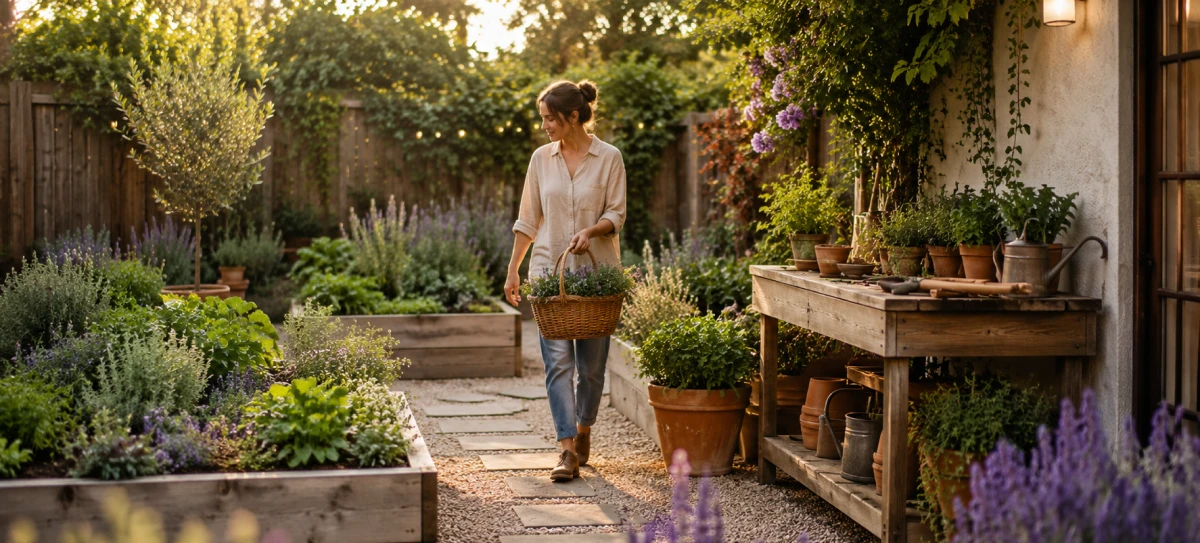
A small herb garden should earn its place in daily life. It does not need to look perfect or include every herb at once. It needs to match your cooking, your light, and your ability to maintain it. Start with the meals you already make. Then choose herbs that naturally support those flavors. Basil, parsley, mint, chives, thyme, and rosemary each behave differently. Some want more sun. Some prefer steadier moisture. Some grow quickly and need regular cutting. When the setup reflects real habits, the garden feels generous instead of demanding.
Why Small Herb Garden Success Starts in the Kitchen
The most useful herb planting begins with your plate, not the nursery shelf. Think about what you cook on repeat. Pasta, salads, eggs, soups, grilled vegetables, and tea all suggest different choices. A cook who uses mint weekly needs another plan than someone who loves roasted potatoes. This approach prevents random buying. It also makes harvesting feel natural. You know why each plant belongs. The garden becomes part of dinner instead of another chore. Practical purpose keeps the setup focused, especially when space is limited.
Read the Light Before Choosing Herbs
Light decides more than style. A sunny balcony can support Mediterranean herbs with stronger stems and sharper fragrance. A softer windowsill may favor parsley, cilantro, or chives. Watch the space across a normal day. Notice morning sun, afternoon heat, shade patterns, and reflected warmth. A compact herb garden setup works best when plants match the conditions they actually receive. Do not force a sun-loving herb into a dim corner. Move the plan toward what the place can support well.
Small Herb Garden Containers Need Practical Access
Containers should make harvesting easier, not prettier for one photograph. Place frequently used herbs where your hand can reach them quickly. Keep watering access simple. Avoid stacking pots so tightly that leaves stay damp or tangled. Give each plant enough space to breathe. Drainage matters because herbs dislike sitting in stale water. A saucer can protect surfaces, but it should not trap moisture for days. Choose pots that suit both the plant and the location. When access feels easy, you will use the herbs more often.
Build a Harvest Rhythm That Encourages Growth
Herbs respond well to steady, thoughtful harvesting. Cutting too little can leave plants leggy. Cutting too much can weaken young growth. Learn the rhythm of each plant and harvest before stems become tired. Snip above leaf nodes when appropriate. Use clean scissors. Take small amounts often. A herb garden PDF can help turn those details into repeatable habits. Keep harvested herbs visible in meals, drinks, and simple garnishes. That reward keeps the routine satisfying. The garden becomes more productive because you keep returning to it.
Small Herb Garden Design Should Stay Tidy
A small planting area feels better when it has a visual boundary. Use matching pots, one tray, a slim shelf, or a defined corner. This prevents the setup from spreading across every surface. Group herbs by water needs when possible. Keep labels discreet or unnecessary once you know the plants. Remove yellow leaves quickly. Wipe spills after watering. These small moves make the garden look cared for without much effort. Tidy design also helps you notice problems earlier. Pests, dryness, and crowding become easier to see.
Let the Garden Become a Signature Corner
The best herb spaces feel personal. They reflect the cook, the home, and the season. Add one detail that makes the corner inviting. It might be a terracotta pot, a small pair of scissors, or a clean tray near the kitchen door. Keep the focus on use. A harvest rhythm gives the planting purpose beyond decoration. Over time, you learn which herbs deserve more room. You also learn which ones do not fit your habits. That knowledge makes every future planting smarter.